
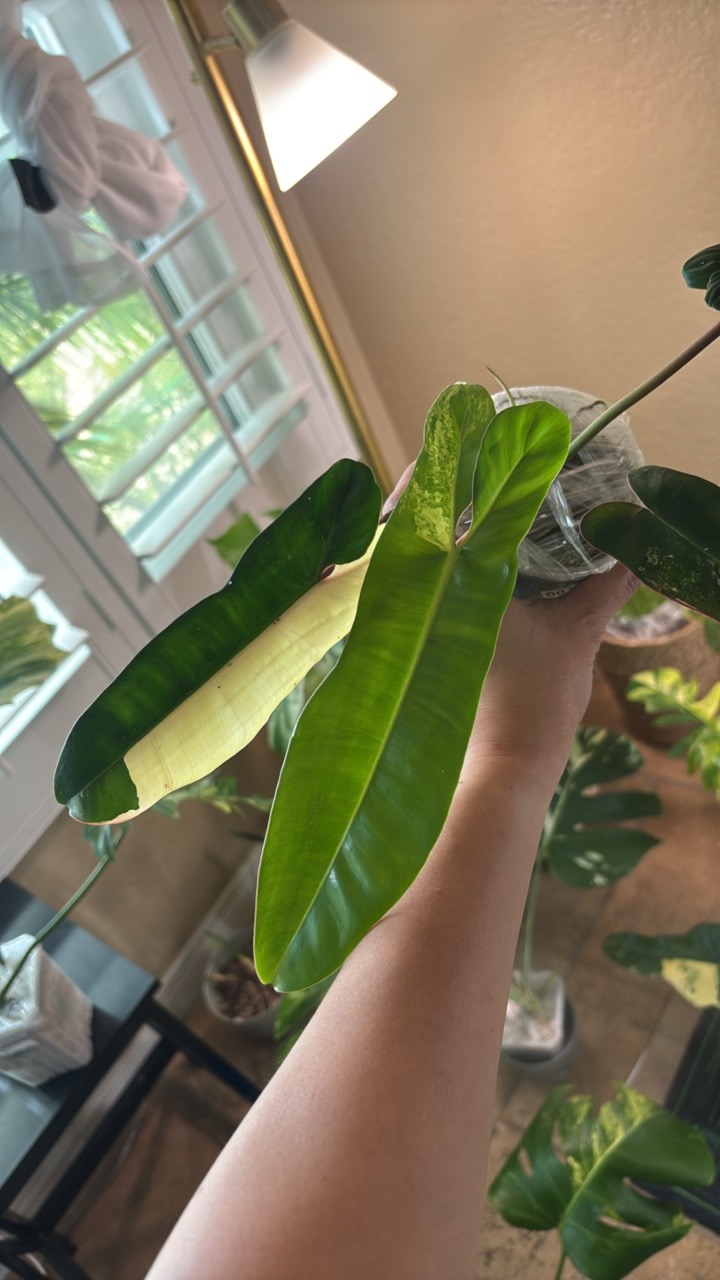
Root rot on an imported Philodendron is not automatically a death sentence, but it is a situation where acting promptly and carefully matters more than with ordinary shipping stress. This guide walks through an actual rescue. If you are not yet sure rot is the problem, begin with “Shipping Stress vs. Root Rot vs. Pests: A Visual Identification Guide.”
The Short Version
- Confirm that it is actually rot before cutting: look for roots that are soft, dark, mushy, hollow, or foul-smelling—not only a drooping or slow-growing plant.
- Remove all visibly affected tissue, cutting back to firm, healthy material.
- Do not return the plant immediately to its old medium or Adarna’s regular chunky aroid mix. Kathleen uses a 50/50 mixture of coarse perlite and high-quality sphagnum moss during recovery.
- Keep the recovery medium lightly moist, not saturated, and monitor the plant rather than watering on a fixed schedule.
- Expect recovery to take weeks, not days. A firm stem and new adventitious roots are more meaningful signs than immediate leaf growth.
Before You Start: Confirm It Is Rot
Gently ease the plant from its pot rather than pulling it by the stem. Healthy Philodendron roots are firm and may be white, cream, tan, or light brown. Rotten roots are typically soft, dark, mushy, hollow, or easily separated when handled. A sour or rotten smell can provide another warning sign.
Leaf-level symptoms alone do not confirm root rot. Drooping, yellowing, stalled growth, and leaf loss can also result from ordinary shipping stress or an abrupt change in conditions. If the roots remain firm and the stem is sound, avoid performing an unnecessary rescue.
The Rescue, Step by Step
- Remove the old medium. Take the plant fully out of its pot and gently clear away enough of the old soil or sphagnum to see the roots, stem, and nodes. Trying to evaluate the damage through a mass of damp medium makes it easy to miss affected tissue.
- Trim back to healthy tissue. Using clean, sharp scissors or shears, remove roots that are dark, mushy, hollow, or collapsing. Cut back until the remaining tissue is firm and healthy-looking. If decay has moved into the stem, continue removing damaged material while preserving any firm stem section with a viable node or growth point.
- Keep tools clean. Disinfect cutting tools before beginning and again before using them on another plant. If you make several cuts while working through damaged tissue, clean the blades before cutting into the healthy section you intend to preserve.
- Prepare the plant for recovery. After trimming, allow excess surface moisture on the cut areas to dissipate while you prepare the recovery container and medium. A fixed drying period is not necessary, and leaving a severely dehydrated import exposed for an extended time can create another source of stress.
- Use a recovery medium. When Kathleen rehabs an imported Philodendron that has lost roots to rot, she rarely returns it immediately to Adarna’s regular chunky aroid mix, and she does not place it directly into water. Instead, she uses a 50/50 mixture of coarse perlite and high-quality sphagnum moss. The perlite preserves air space around the recovering stem and nodes, while the sphagnum holds controlled moisture as new roots develop.
- Manage moisture by observation. Keep the sphagnum-perlite mixture lightly and evenly moist, never waterlogged. Do not follow an automatic watering interval or leave the medium saturated in an attempt to compensate for the missing roots. Check the medium itself and add moisture only as needed.
- Provide stable recovery conditions. Keep the plant warm, humid, and in bright indirect light without subjecting it to harsh direct sun or repeated environmental changes. Humidity and warmth support the recovery environment, but neither can compensate for decaying tissue that was left behind.
- Wait before fertilizing. Skip fertilizer until the plant has developed a functioning new root system and is showing stable growth. Fertilizer does not replace roots and can add stress while the plant is still recovering.
What to Expect Afterward
Some additional leaf loss after a rescue is common and does not necessarily mean the attempt failed. A plant with few or no roots may not be able to maintain all of its existing foliage while it redirects energy toward survival and new root development.
In Kathleen’s experience, imported Philodendron commonly take about three to eight weeks to show meaningful recovery, depending on the plant, temperature, humidity, and extent of the damage. The first encouraging sign is not necessarily a new leaf. A stem that remains firm and plump suggests that the plant is stabilizing rather than continuing to deteriorate.
The clearest sign of recovery is new adventitious roots emerging from a viable node. Kathleen waits until those roots are approximately one to two inches long and beginning to branch before moving the plant into its regular potting mix. Continued softening, spreading discoloration, or a worsening rotten smell suggests that damaged tissue may remain and the plant needs to be reassessed.
When It Is Probably Not Saveable
Kathleen has found that a Philodendron can recover even after losing its entire root system, provided that firm, healthy stem tissue and at least one viable node remain. She has grown complete plants from leafless, rootless stem sections commonly called “wet sticks.”
The plant becomes unlikely to recover only when the rot has advanced so far that no firm, uninfected node or viable growth point remains. Rot reaching one node or the apical growth point is not necessarily fatal if another healthy node survives below the damaged area. Cutting back to that tissue may still preserve a chance of recovery, but no rescue method can guarantee the outcome.
For guidance on caring for an imported plant from the day it arrives, read “How to Acclimate a Rare Aroid After Shipping: A 14-Day Decision Guide.” If you still need to determine whether you are seeing ordinary shipping stress, root rot, or pest damage, use “Shipping Stress vs. Root Rot vs. Pests: A Visual Identification Guide” before cutting.